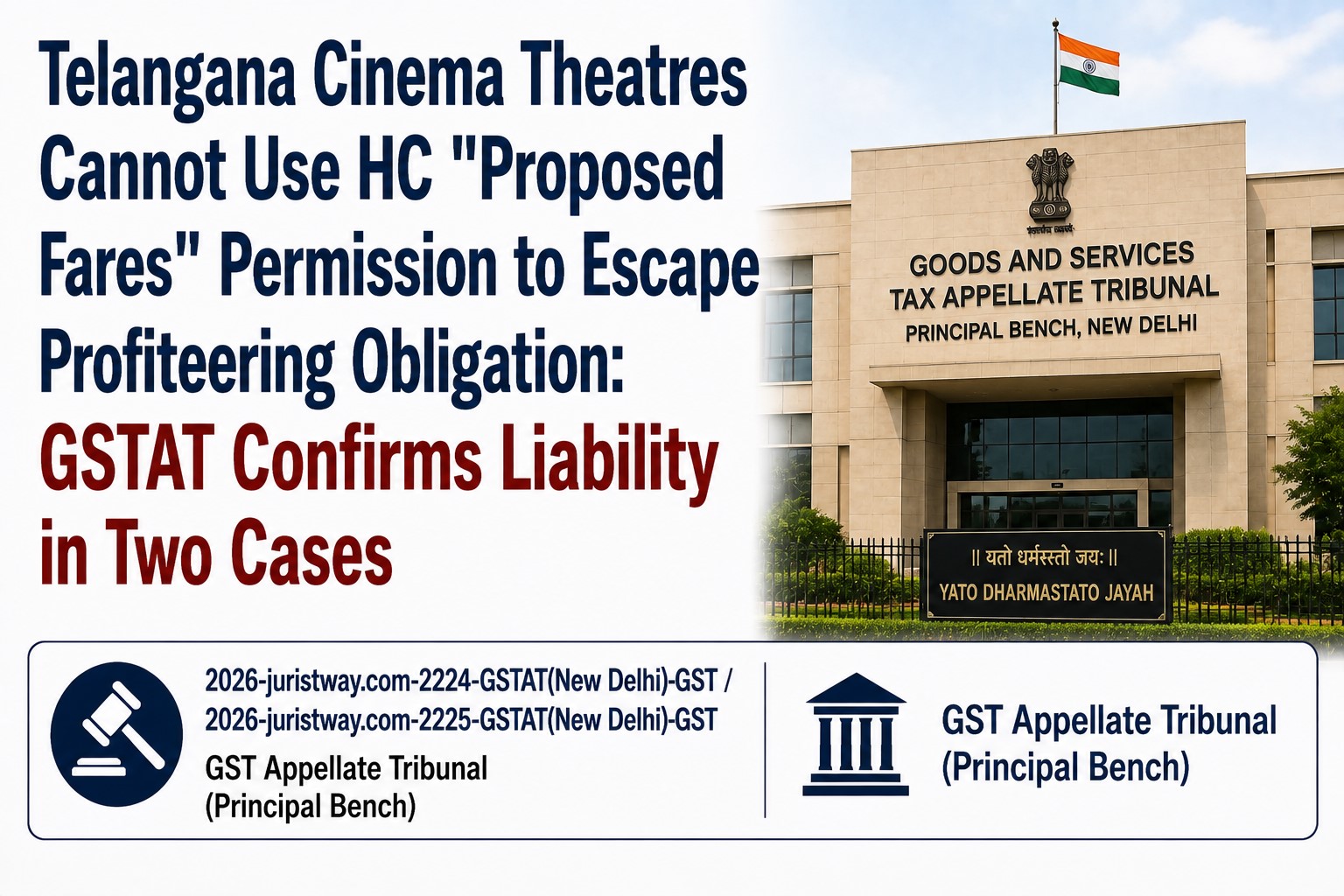
The GST Appellate Tribunal (Principal Bench) has confirmed anti-profiteering findings against two Hyderabad cinema theatres — Vimal 70MM and Arjun Theatre 70MM — that had failed to pass on the benefit of the GST rate reduction from 18% to 12% on movie tickets (for tickets priced at Rs. 100 or less) with effect from 01.01.2019. Both orders, by Member (Technical) A. Venu Prasad in NAPA/6/PB/2025 and NAPA/8/PB/2025 (both decided 13.08.2026), apply the same analytical framework and reject the same defence — that Telangana High Court orders permitting theatre owners to collect their "proposed fares" absolved them of the Section 171 obligation.
The factual pattern in both cases is identical. When the Central Government reduced GST on cinema admission tickets from 18% to 12% with effect from 01.01.2019 (through Notification No. 27/2018-CT(Rate) dated 31.12.2018), both theatres maintained the same cum-tax ticket prices — Rs. 100, Rs. 60, and Rs. 30 for their respective seat categories — rather than reducing prices commensurately. Since the GST rate had decreased, maintaining the same final price necessarily meant increasing the base price (the pre-tax component). Vimal 70MM increased its balcony base price from Rs. 84.74 to Rs. 89.28 per ticket; Arjun Theatre's base price movement was similar across all categories. The DGAP's investigation — covering January to July/August 2019 respectively — confirmed profiteering of Rs. 4,72,038 (Vimal) and Rs. 14,26,344 (Arjun) computed on actual ticket quantities sold.
Both theatres raised the same primary defence: that the Telangana High Court's 2016 order (which set aside the State Government's ticket price regulations and permitted theatre owners to collect their "proposed fares" subject to intimating the Commissioner of Police) had effectively authorised them to price as they chose, and that their post-rate-reduction pricing had been communicated to the police authorities. The Tribunal rejected this comprehensively. The Telangana High Court's permission to collect proposed fares within the regulatory maximum is not a licence to retain the benefit of a GST rate reduction. Section 171(1) of the CGST Act operates as an independent statutory obligation — it requires a commensurate reduction in prices on every occasion that the rate of GST is reduced, regardless of what pricing permissions may exist under State cinema regulation law. The Telangana High Court itself had affirmed this position in Sudarshan Theatre 35MM v. Union of India (W.P. 4760/2021), holding that Sections 171 and 172 do not provide any exception for cinema tickets and the authority cannot relax the requirements of Section 171(1).
Additionally, neither theatre had produced any evidence that their post-January 2019 ticket rates had actually been approved by the Commissioner of Police — the representations placed on record were requests for enhancement of rates for later, specific films and periods, unaccompanied by any reply or approval from the authority. In the absence of demonstrated approval, even the regulatory route argument collapsed. The profiteering amounts were confirmed with 18% interest, payable 50% to the Central Consumer Welfare Fund and 50% to the Telangana State Consumer Welfare Fund (since individual consumers are not identifiable). No penalty was levied in either case as the contraventions ended before 01.01.2020.